Monday, April 10, 2023

Easter Monday Seedlings and the 2023 Tomato List

  It's a sunny, blustery Easter Monday, 7 degrees C outside at noon.  I'm about to make a big mug of hot chocolate and poke around the yard to see how much more snow melted since yesterday.

  Things are gradually getting underway for the gardening season.  I started Amsterdam celery and Giant Musselburgh leeks in late February, and waited until April 1st to start tomato (varieties listed below) and Diamond eggplant seeds. 


Celery and leek seedlings, and a bit of marjoram growing in a peat pellet. 


More celery!  (The germination rate was excellent, and I sowed generously.  Opps.)


   I'm growing strawflowers (Pastel Mix) for the first time this year.  The seeds just starting to germinate. Pacific Beauty Mix calendula are planted in the right-hand container (no sprouts yet!).


Chives on the south side of the house have emerged.


   On April 3rd and 4th, I started cabbage (Brunswick, Golden Acre, Kalibos, and Cour di Bue), kale (Lacinato, Rainbow Lacinato, Curly Blue, and Red Russian), and a few pansies (Springtime Cassis) in milk jug greenhouses.  Later this month, I'll add chard, cosmos, herbs, and possibly some lettuce to the collection of jugs.


TOMATOES 2023
 
These are the varieties chosen for 2023.  The Rose de Berne seeds were old (at least 10 years) and only three have germinated.  I might select another pink variety to replace them.  I received a few Franchi Red Pear in a trade recently.  So far, only three have germinated.  The rest seem to be coming along well.
 
Update: A Russian pink paste variety - Petrusha Ogorodnik - was started April 12.

*First time growing these varieties

Determinate

EM-Champion (DET, red/meaty, 3-4’ tall, can grow in large pots, early-midseason, Russian origin.)

Principe Borghese  (DET, red, heirloom, determinate, small, dry, few seeds, good for sundried tomatoes,~ 75 DTM)

Fisher’s Earliest Paste  (DET, red, (shape?), early, hardy, good flavour.  90+ years of selection by the Fisher family of Montana. RARE.)

*Mongolian Dwarf  (DWRF, large red oblate, 100-200g, only 20-25cm tall, early/fast growing.  Bush habit, spreads to ~2’ across. Russian (Siberian) origin.  Uncommon.)

Black Sea Man (DET, brown/black, heirloom, beefsteak, 8-12 oz, rich flavour, slicer, determinate, can be grown in large containers, Russian origin, early, ~ 75 DTM)

*Favourie de Bretagne  (DET, 3" tall, elongated, green/gold striped (Green When Ripe), sweet/fruity, created by Tom Wagner. 80DTM. RARE.)

*Uluru Ochre (DWARF, dark orange/green/ochre, med-large/6-12oz beefsteak, sweet smoky flavour, juicy, compact plants, heat-tolerant, named after the giant monolithic rock in central Australia (Uluru/Ayers Rock).  Early 65-70DTM.  A cross between “Orange Heirloom” and “Rosella Purple” by Patrina Nuske Small.)

*Fred’s Tie-Dye Dwarf (DWARF, 3’ tall, deep red w/green and gold metallic stripes, flesh similar in appearance and taste to purple/black tomatoes, beefsteak, average 8oz, minimal cracking.  Sweet, juicy.  Essentially “Berkeley Pink Tie Dye” on a dwarf plant.  75DTM.)

Clear Pink Early  (DET, round, pink fruit, compact, heavy yields, bushy growth, 3-6oz round, slicer, sweet, Russian heirloom)

*Petrusha Ogorodnik (DET, elongated, plump, dark pink paste, compact. Some sources say early-mid and others say mid-late season maturity.  Sweet flavour. Productive.  Good variety for cooler climates.  Russian origin. RARE/uncommon in North America.)


Indeterminate

Reinhard’s Chocolate Heart (INDET, brown oxheart, rare, rich flavour, 300-400g, cross between Cherokee Green x a pink oxheart. 80-85DTM. German origin.

Hungarian Heart  (INDET, pink, large oxheart (often 1lb or more), heirloom, paste/canner/fresh, crack-resistant, few seeds, origin: Hungary, ~ 85 DTM)

*Rose de Berne (INDET, rose-pink, round, 4-6oz, dependable, crack-resistant, blemish-free excellent flavour, good for slicing, cooking, or saucing.  Good yields. 75-80DTM. Swiss heirloom.)

*Sylvan Gaume (INDET, large red variable oxheart (some say a beefsteak), great flavour, 80DTM, Canadian heirloom, RARE.

*Franchi Red Pear  (INDET, red, large, pear-shape with vertical ribbing, 8-18oz, early for a large tomato, 75DTM, origin: Northern Italy)

*Moonglow  (INDET, deep orange globes, 6-8 oz, productive, excellent sweet flavour, solid flesh, few seeds, long shelf life/good keeper, 85DTM)


Friday, March 24, 2023

Little Moose

This little guy dropped by tonight for supper (the currant bush).  What a cutie!


Saturday, March 11, 2023

Orchids, a Celery Forest, and Roasted Butterbush Squash

   Seed starting is still several weeks away for most things, but the itch to get started is alive and well.  In the meantime, a little blog update. 

   For the first time, all three of our orchids bloomed at the same time.  The white ones and small, peachy/pale green ones haven't bloomed in years.


   During the winter months, we grow pans of oat grass so the cats have greens to nibble on while they dream of sunnier, warmer days.  This kitty likes to be hand-fed individual blades of grass.  She slurps them down like oysters!


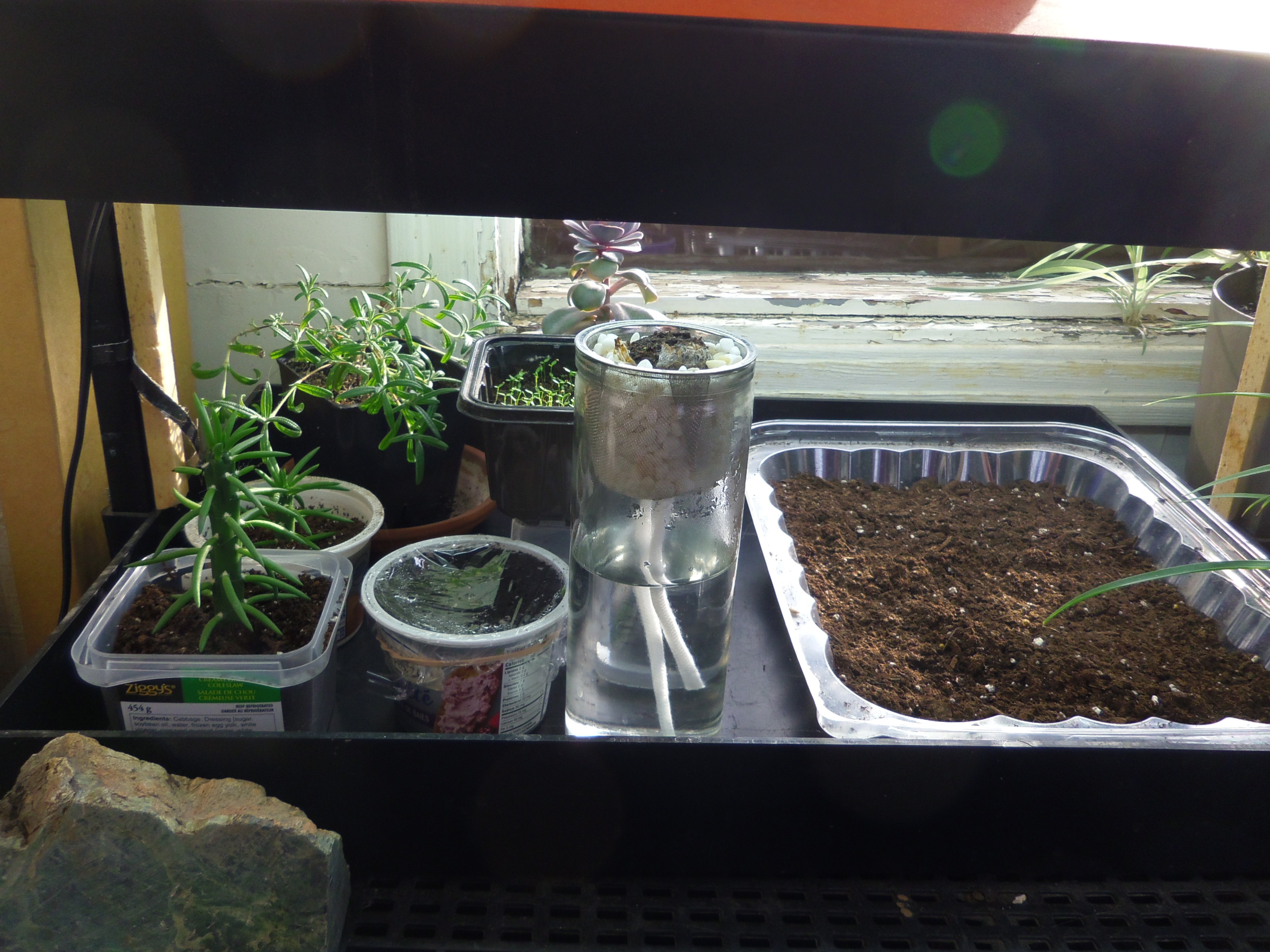
   Under the grow light: a new pan of cat grass on the go, a few small cacti I'm trying to root, a small rosemary plant, a succulent plant, a small container of onion seeds, and in the tall, glass container (a McKenzie herb starter kit), some marjoram seeds.


   Also under the grow light are Amsterdam celery seeds.  This is a "cutting" type of celery (larger leaves and slenderer stalks than regular celery.)  The seeds were new, so most germinated, resulting in a tiny forest of sprouts.  If I can manage to grow them to transplant-size and repot them, I will have plenty to share, from the looks of things...


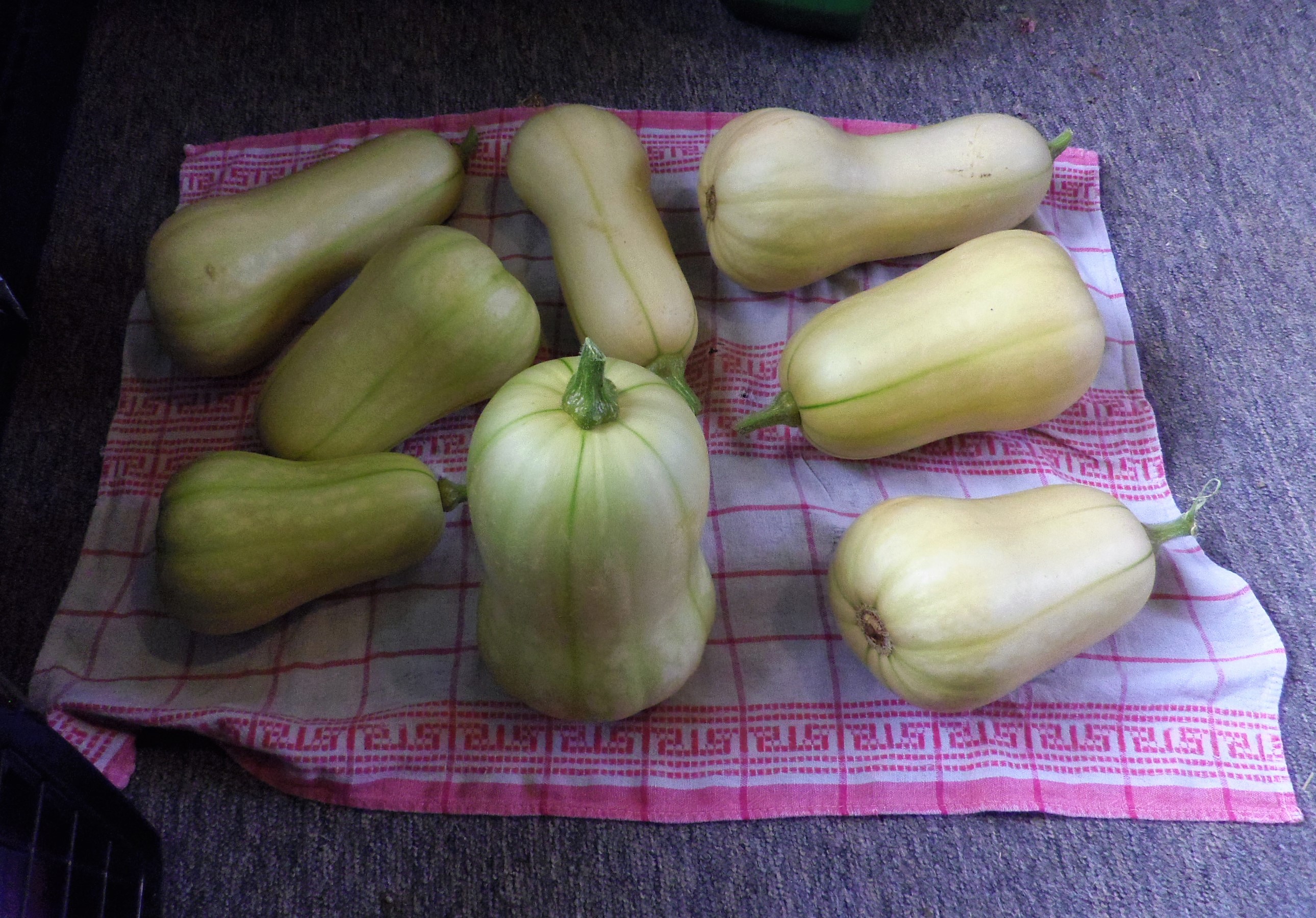
   This afternoon, I looked through the squash we had stored last Fall.  I decided to roast some of the Burpee's Butterbush squash (the first ones I've tried - thankfully, most stored well and were still fine to cook and eat all these months later).  They are easy to prepare and are very tasty.  The flesh is bright orange and softer than a butternut squash.  I ate one for lunch, stored another in the fridge, and skinned/cubed the rest to freeze.  These will no doubt have a space in the garden again!


   A few weeks ago, I was able to pre-order some fingerling potato varieties from a local farmer.  They will be delivered in May.  It was nice to have this option, as the shipping costs to have seed potatoes mailed are quite high.  The varieties on order are Amarosa (mid-season, red skin and pink/red flesh) and Bellanita (early, yellow skin and flesh).  We grew a small number of Amarosa in 2019.  They were delicious and I've pined for them since.  


Wednesday, October 12, 2022

Baby Butternuts, Black Carrots, and a Steamed Pudding

   The small butternut squash (Burpee's Butterbush) were picked September 18th.  They could have used a longer time on the plants to ripen, but a string of heavy frosts made it a safer bet the pick them.  They spent a month in the sunny plant room, curing, and then were put in a cool cabinet to store.  We haven't eaten any of them yet, but we did use one of the Galeux D'Eysines to make pumpkin pie for Thanksgiving.  Delicious!


   This year, in addition to the carrots I usually grow, I tried Pusa Asita black carrots.  I didn't expect them to do well, but they absolutely thrived in our hot, dry summer.  They are deep purple and bleed/stain like a beet when cut.  I braced myself for a very sweet taste and the same uncomfortable sugar rush that hits when eating beets.  To my surprise - and relief - they tasted just like regular home-grown carrots.  Whew!  I've snacked on them raw, as boiling or steaming them with other carrots results in everything being purple.  They would probably be wonderful roasted in the oven, too.


    This afternoon, R. used carrots and a potato from the garden to try his hand at a steamed carrot pudding.  This recipe is on the AllRecipes website and was submitted by Joyce Rehagen.  I'll include the recipe below.  R. added 1/4 cup of dried cranberries to the mix.  We skipped the buttery sauce and enjoyed the pudding plain.  These can also be made in large mason jars and given as gifts.  Neat!

   The best light in the house is in the plant room, thus...


Carrot Pudding


Ingredients

 
1 cup grated carrots
1 cup peeled and shredded potatoes
1 cup white sugar
1 cup raisins 
1 cup all-purpose flour 
1 teaspoon baking soda 
1 teaspoon ground cinnamon 
1 teaspoon ground allspice 
1 teaspoon ground cloves 
½ cup butter   
½ cup heavy whipping cream
1 cup white sugar 
1 ½ teaspoons vanilla extract


Directions

  1. In a large mixing bowl, combine carrots, potatoes, sugar, raisins, flour, baking soda, ground cinnamon, all spice, and ground cloves. Transfer mixture to a clean 1 pound coffee can. Secure wax paper over the top and place the filled can in a large pot with 2 to 3 inches of water. Cover the pot and bring the water to a simmer.

  2. Steam the cake for 2 hours. Serve warm.

  3. Buttery sauce: In a medium-size pot, combine butter or margarine, cream, sugar, and vanilla. Heat until the mixture is liquid. Spoon mixture over the warm carrot pudding to serve. 


Sunday, October 9, 2022

Garlic's Planted

   Late September and October (thus far) have been mild, including the overnight temps.  Only a few heavy morning frosts to speak of.  That has made it tricky to time garlic planting this year.  I used to always plant the garlic patch around September 25th, but the last few years have given us warmer autumns.  That has pushed the planting into October.

   In any case, I gave into the urge and planted the patch this weekend, despite most overnight temps in the forecast still being above zero.  The bulbils and rounds (in pots) went in on October 7th and the cloves were planted October 8th.  The patch doesn't look like much right now, and it still needs to be covered with chopped leaves.  Doing the garlic patch is one of my favourite gardening tasks, and it is a nice to have it finished and "put to bed" for the season.


   The patch is wider than usual this year, divided by a weeding path in the middle.  Varieties are separated by rows of rocks.

The varieties planted this year are:

Bulbils: Central Siberian and Northern Quebec

Rounds: Red Rezen, Red Russian, Russian Giant, Northern Quebec, Pyong Vang Korean, Mother-of-Pearl, Brown Tempest, and Persian Star.

Cloves: Kiev, Baba Franchuk's, Central Siberian, Brown Tempest, Northern Quebec, and Red Russian.


Descriptions

Russian Giant  – Hardneck – Marbled Purple Stripe – Very hot when eaten raw.  Best grown in cool/northern climates.  Large bulbs, often 3 inches across.  4-6 cloves per bulbs.  Long storing (~8 months).  Skin is brownish-purple.

Pyong Vang Korean – Asiatic Hardneck – Glazed Purple Stripe.  Rare, hot, early to harvest.  Easy to peel, moderate storage (~6 months).  REMOVE SCAPES when they emerge. This variety should be harvested when 1-2 leaves have turned brown (unlike most varieties).

Red Rezan – Hardneck – Glazed Purple Stripe – Small plants and large bulbs.  Medium heat.  Pretty cloves; skins have almost an iridescent/gold tinge.  Averages 6-10 cloves per bulb. This is a heritage variety.

Persian Star – Hardneck – Purple Stripe – Cold-hardy variety and a Canadian heritage variety.  Late harvest.  5-6 months storage.  Spicey but not too hot.

Mother of Pearl SOFTNECK Silverskin – long storage, dense heads, no scape develops, rare variety.  Of the Silverskins, this is the earliest variety to mature.

Red Russian – Hardneck - Marbled Purple Stripe (a kind I plant annually).  Very dependable.  Excellent storage.  Large bulbs, averaging 5-7 cloves per bulb.  Can tolerate wet and very cold winters. Hot flavour with a bit of sweetness.

Northern Quebec – Hardneck – Porcelain (a kind I plant annually).  Good storage.  Averages 4 cloves per bulb. Does well in most climates and tolerates very cold winters.  Mid-season harvest.  Hot (and some say slightly smokey) flavour.


Thursday, October 6, 2022

Mama and Little

   We've had many visits from deer this year, but yesterday morning was the first visit from moose in a while.  


   A mama moose, who was in our neighbour's back yard, became separated from it's youngster, who was in the alley.  They were separated by a 6 foot chain-link fence.  We think the mama hopped our back gate and then the fence that separates our property from our neighbour's: both are significantly shorter than the neighbour's back fence.  The mama would have had no problem navigating our back gate and fence, but her youngster would have.


   The neighbour has two gates beside their house, blocking their back yard from the street.  That prevented mama moose from heading onto the street, down the block, and into the alley, where her youngster waited.   The little one began making distress calls, and mama anxiously trotted back and forth between the back and front of the neighbour's yard, trying to get out.


   Finally, mama jumped (or rather, hurled herself over) the fence and managed to get into the alley despite one of her back legs/hips being temporarily caught on the top of the fence.  

The fence is a bit worse for wear...


   ...but Mama and Little were happily reunited.  They munched on some leaves before leaving the north end of the alley together.